Clean Your Home Without Dying
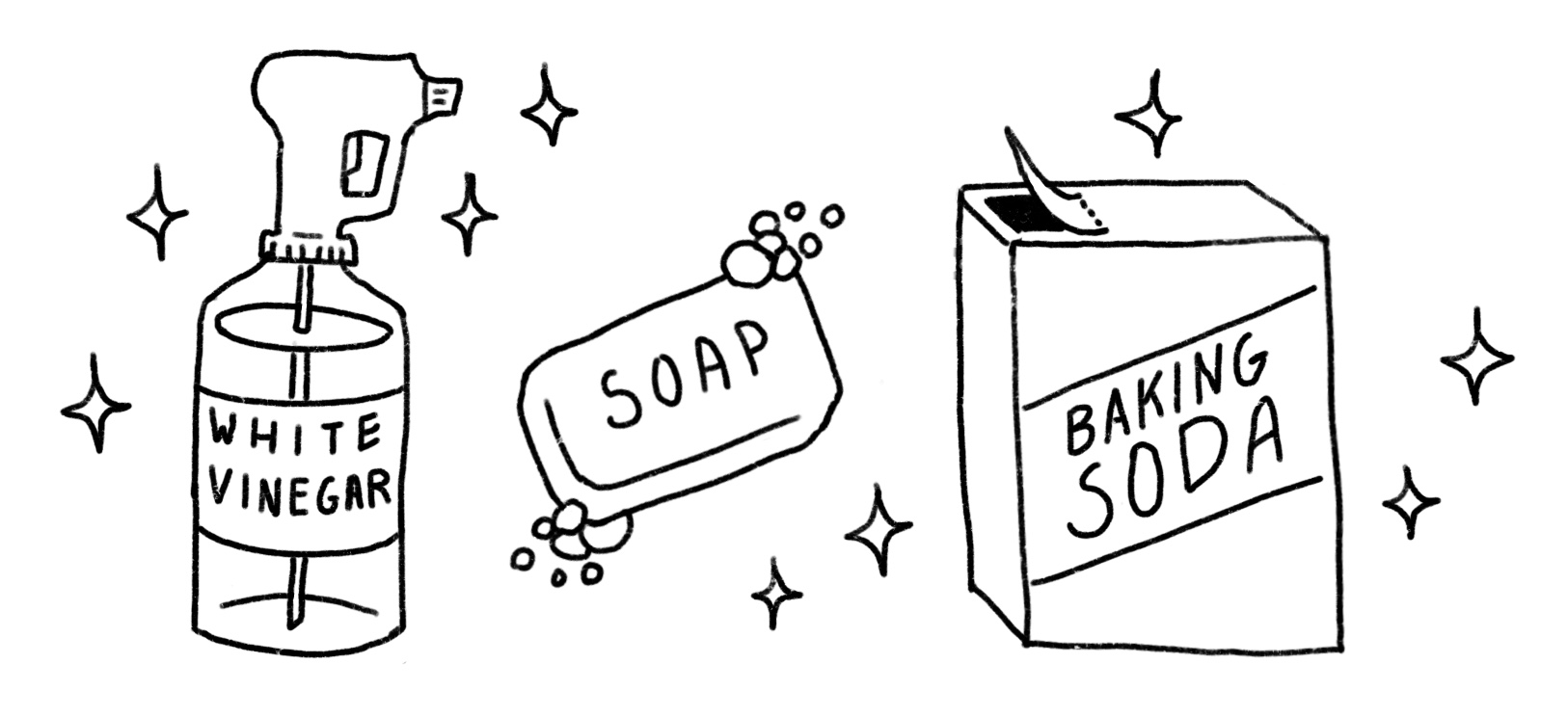
Fancy store-bought chemical cleaning products didn’t hit the shelves until the 40s. Before then, people were cleaning their homes with basic & highly effective ingredients that you probably have in your kitchen.
Why should you start using those clean ingredients instead? Fun Fact: The Poison Control Hotline was a direct response to chemical cleaning products becoming widely available. Basically, store-bought chemical cleaning products are toxic, bad for your body, and dangerous to have in the house if you have small children. Not to mention, those single-use spray bottles are expensive and wasteful! But don’t worry, there’s a better way.
The Good Stuff
- White vinegar is a fantastic multipurpose cleaner, great for mild disinfecting, removing gunk, and cleaning dirty surfaces! And best of all, its gentle on humans and animals. You can even drink it.
- Baking soda is amazing for absorbing smells, like removing weird fridge smells and deodorizing old furniture and carpets. Sprinkle it on a surface, let it sit for a few hours (or a few days, depending on how powerful the smell is). Don’t forgo using soap to clean up the bulk of the mess first, though!
- Soap straight up. Dove, Ivory, Mrs. Meyer’s, Dr. Bronner, or just that basic as heck bar-soap you can make yourself. Relatively safe to eat (although I wouldn’t recommend it) and you can use it on your body as just as well as your dishes.
Less Safe But Frankly Invaluable
- Lighter fluid removes sticky residue leagues better than anything else, although it is not safe to ingest, and obviously, flammable.
- Pet Odor Eliminator with enzymes gets rid of pee or vomit smells or basically anything else gross your pet might do indoors. It is honestly essential if you are a pet owner, because getting rid of the lingering smell is the best way to make sure (for example) your dog won’t pee on the couch over and over again. I haven’t found any DIY alternative for this, but non-toxic stuff like Paw Sense is solid as heck.
Primary Uses & Combos
As a general rule:
Vinegar + soap = ineffective
Vinegar + baking soda = GREAT
Soap + baking soda = Just fine
Dishes
Bar soap will take care of mild mess, and a paste of baking soda and water will remove grease or oil. Normal soap will leave a residue on your dishes, so rinse with a mix of water and vinegar to get everything squeaky clean.
(Note: Don’t use vinegar in your dishwasher, it cleans your dishes but damages the rubber parts of the machinery.)
Counters, tables, and other surfaces
Mix a solution of 1 part White Vinegar and 3 parts water in a spray bottle, it does an greate job! It isn’t strong enough to truly disinfect, but using true disinfectants in your home isn’t healthy, anyway.
If you don’t like the smell, don’t worry, it dissipates completely when it dries.
Non-porous Floors (linoleum, ceramic tile, etc)
1 part White Vinegar and 3 parts water with a mop will do a great job.
Porous Floors (hardwood, stone, etc)
Mix a small amount of pure soap in water, spray it on, and mop it up! You’ll want to do another round with just water to remove any soapy residue, and one last pass with any recommended treatment for maintaining your floor.
Toilet
Mix 1 part baking soda with 4 parts vinegar. Mix it with your toilet brush, let it sit for 15 minutes, then SCRUB and flush!
Mold and Mildew
Soak the surface in 100% vinegar and leave it for an hour. Scrub scrub scrub! If it’s a vertical surface, mix baking soda with water so it forms a paste, and let it sit for an hour. Then wash with vinegar and SCRUB!
Clothes
You can use white vinegar in your laundry! It will brighten whites, but may fade colors on certain fabrics, so use caution. Do not mix vinegar with laundry detergent, though! They cancel each other out because of their pH, so stick to one or the other.
What have I missed? I probably missed stuff. Send me a message with questions and I’ll update!
Storing your new cleaning potions and mixtures
Chances are, you’ve been using store-bought stuff for quite a while, and I’ll bet you’ve got a bunch of spray bottles under your kitchen sink. This is excellent, because we can reuse all of them!
For bottles with tops that come off easily
Unscrew those puppies, rinse them out about 10 times. (Don’t forget to rinse the inside of the spray mechanism by spraying vinegar and clean water through it a whole bunch!)
For bottles with tops that are locked on
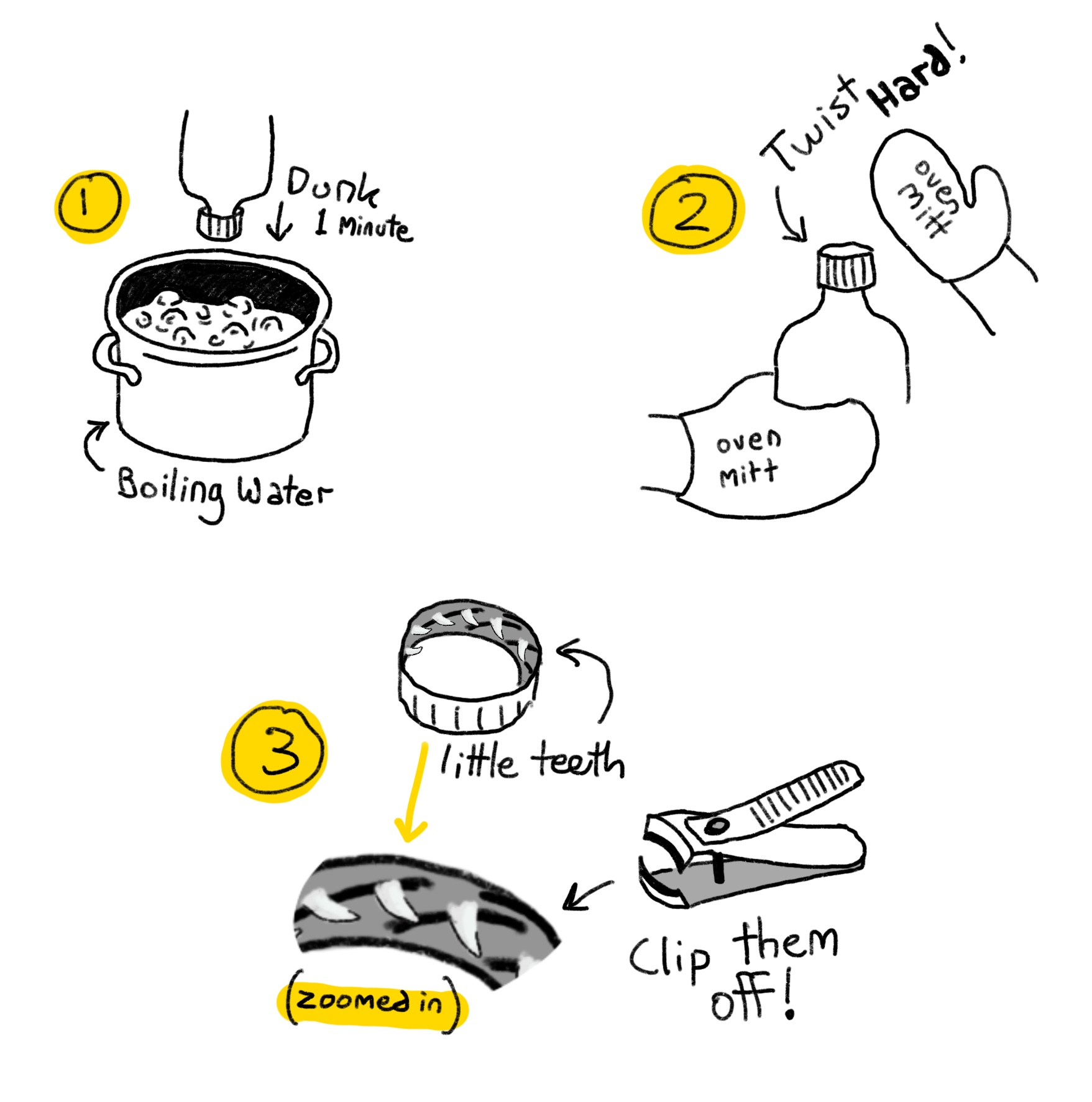
These are a challenge, but we can do it. Most of these locking mechanisms are made by angled plastic teeth inside the cap. They’re angled in such a way that the cap can be screwed on, but not off again. I used this method specifically to hack a Swiffer Wet-Jet, which had a nasty cap. The hack goes like this:
- Dunk the cap in boiling water for 1 minute.
- Wear oven mits to protect your hands from the heat, and twist it HARD.
- Find the little teeth inside the cap, and use a nail-clipper to clip them off.
Once you’ve made the cap friendly, wash the bottle out real good, and fill it with your stuff!
Removing labels so you can make your own
Peel off the labels and then use lighter fluid to get rid of the sticky residue.
To label them yourself, you can do something as simple as writing on the bottle with a sharpie marker, or make something cute and fancy.
For a paper label, cut out a piece of paper that fits nicely on the bottle. Decorate the paper however you want! When you’re finished, use Mod Podge or a similar glue to attach it permanently on the bottle. Paint the back of the paper with the glue, and stick it on the surface. To waterproof the label, paint the front of the paper with glue as well (as long as you are using a glue that dries clear).
Now, I’m gonna be totally straight with you, I DO use 1 totally unsafe store-bought cleaning product: motherfreakin Foaming Bleach Bathroom Cleaner. Here’s why. I have really old bathroom & kitchen sinks in my apartment that get yellow and gross in 0.5 seconds, and bleach is the only thing I’ve been able to find that turns them white again. To me, the nasty stuff is worth it because of how much less stress I have over yellow-y sinks.
So my takeaway is: replace the products you can, that you feel good about, that don’t create additional stress in your life. The best thing you can do for your home and the environment is keep yourself feeling good and strong about the efforts you’re making so you can keep on making them. Now, go obliterate some gunk!!!!